

Celebrating
tomorrow’s
mobility.
20 Years of EICT.
Shaping the future together.
For two decades, we have stood for professionalism, strong methodologies, and a commitment to doing things exceptionally well.
What has always guided us: the joy we find in our work – and the conviction that quality starts with mindset.
We are grateful for the trust of our shareholders and customers. For partnerships that have grown over many years. For the journeys we’ve shared that have brought us to where we are today. And for the opportunity to work in one of the most exciting technology sectors of our time!
Looking back allows us to pause and sharpen our focus on the future. We know the world is changing faster than ever before, economically, socially, and technologically. That makes us rely even more on what sustains us: experience, curiosity, and a strong team.
On that foundation, we look ahead with confidence!

A moment
that connects us
Our little Gaulish village has turned 20! Founded as an innovation platform for technology topics, it has continuously evolved and reinvented itself over the years. Yet its core has remained unchanged: research managers acting as the “neutral third party” in collaborative projects and strategic partnerships.
The deeply European conviction that partnerships drive us forward together remains our foundation today, just as it was then. For us, fostering a culture of collaboration between industry, academia, and applied research means bringing the right partners together, aligning diverse interests around shared goals, and enabling outstanding results.
Through our projects in automated driving and Artificial Intelligence, we have always helped shape technological change. Equally important is our commitment to developing new methods and formats and adapting them to changing conditions. In this sense, 20 years of EICT stand for one thing above all: the courage to set things in motion before they become the norm.
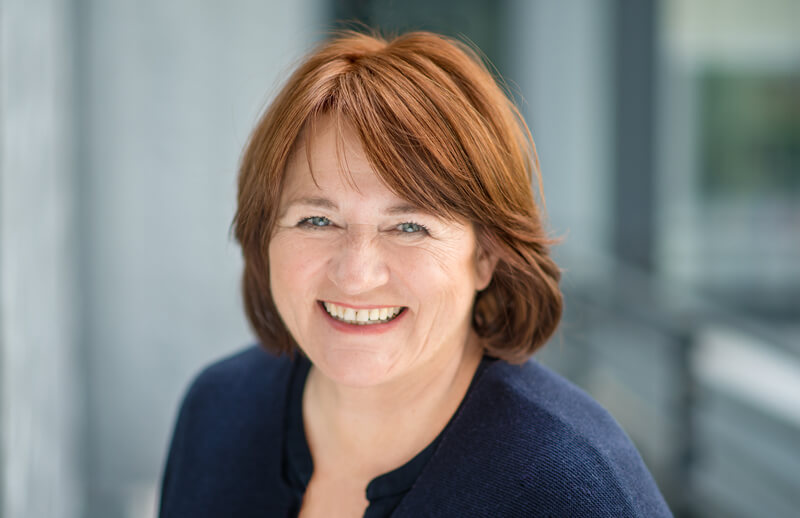
Tanja Kessel, Managing Director
Milestones
Moments that shaped us, whether small internal gatherings or major public-facing events, tell part of our story. They show how we have grown, what has inspired us, and how we have continued to evolve.
2008
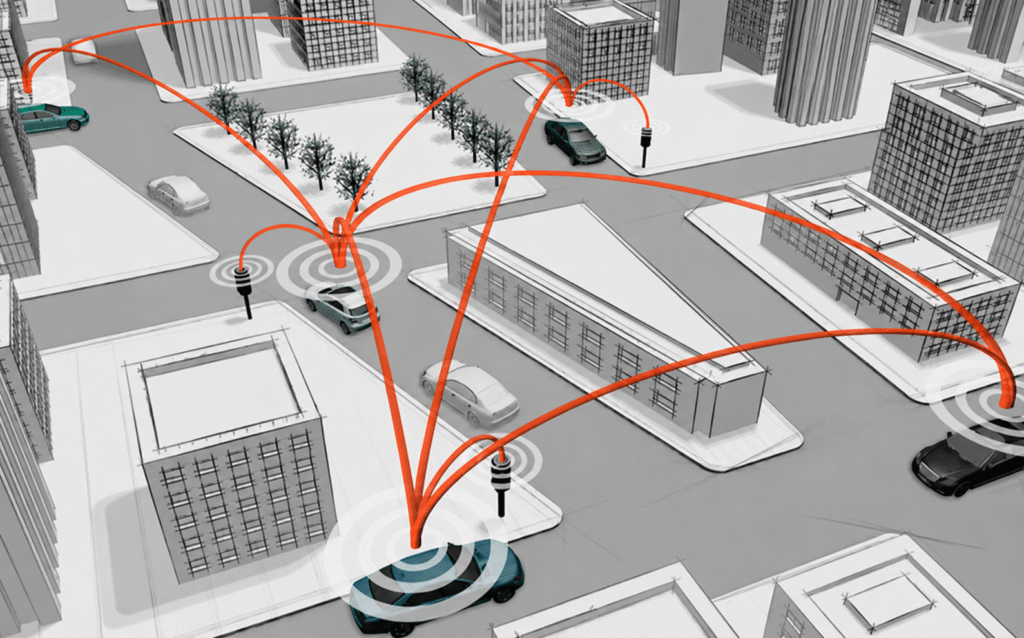
ADAS & C2X Field Operational Tests
Field operational tests become the new way to bring technologies such as automated driving and connected communication to market readiness. With projects like simTD, euroFOT, DRIVE C2X, and later L3Pilot, a series of landmark national and European flagship initiatives takes shape. Together, they lay the foundations for today’s proving grounds and real-world test environments.
And here, too, stories emerge: data transported on USB sticks at the end of the day, data loggers “dying” one after another in the field, and the first cross-border campaign for connected mobility.
2011
EIT Digital / 28DIGITAL
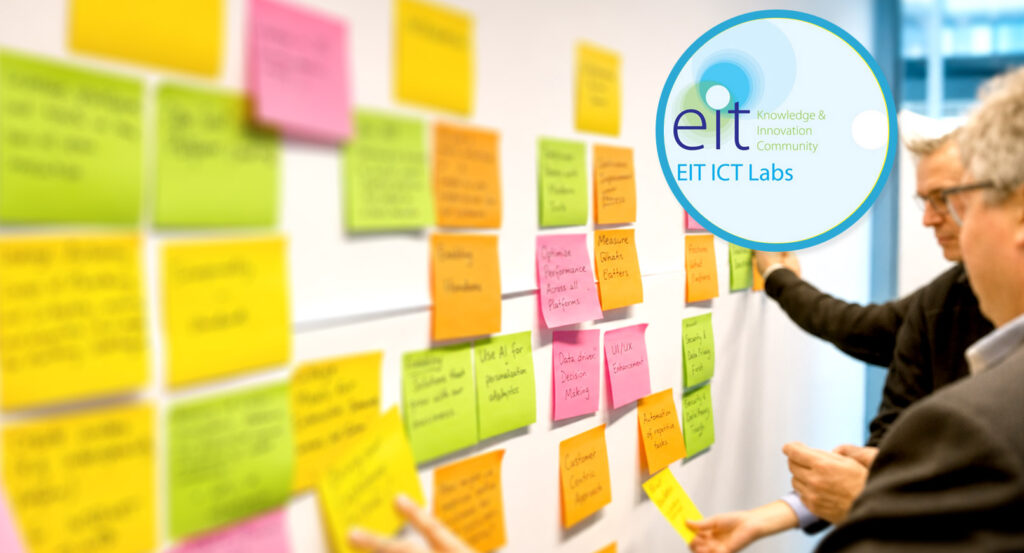
Winning the ICT Knowledge and Innovation Community of the European Institute of Innovation and Technology (EIT) gives rise to one of Europe’s first open innovation ecosystems. EICT takes on the establishment of the German node, bringing with it a team transfer and plenty of start-up experience from its own early years.
And this, too, is part of the story: a name that happens to sound suspiciously close to ‘EICT’. The larger scale, however, is no coincidence. Our DNA and expertise provided a decisive boost to the sister platform during its launch phase!
2015
A New strategic European Direction
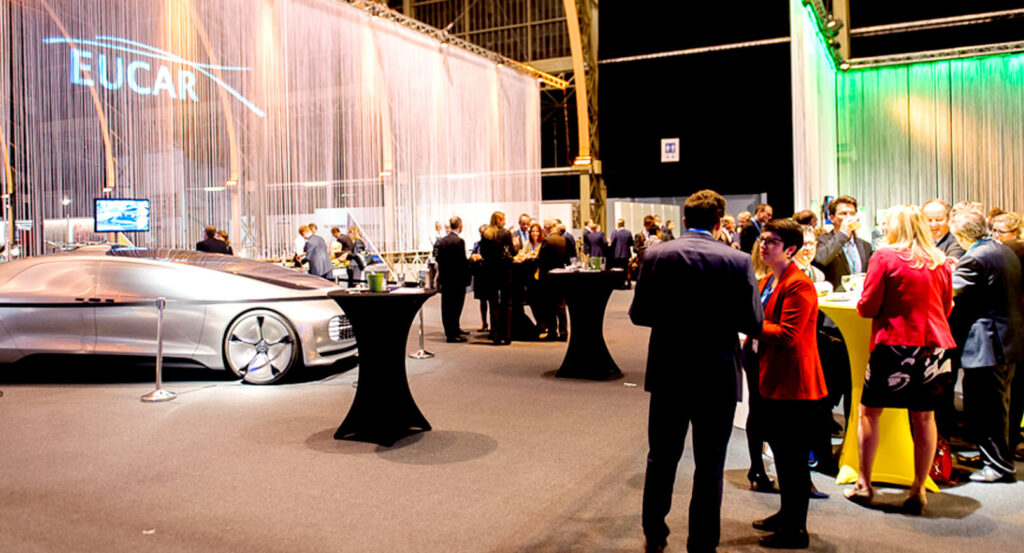
EICT supports the strategic evolution of EUCAR, from close collaboration with its Chairman to a comprehensive repositioning of the organisation. The process is built on stakeholder surveys, new guiding principles, and an enhanced conference concept. The partnership remains a defining one and continues through subsequent strategic initiatives.
The annual highlight: the EUCAR Annual Reception and Conference at Brussels’ Autoworld museum. It bridges automotive heritage and the future of mobility, while regularly showcasing our flagship projects.
2016
VDA Flagship Initiative for Automated and Connected Driving
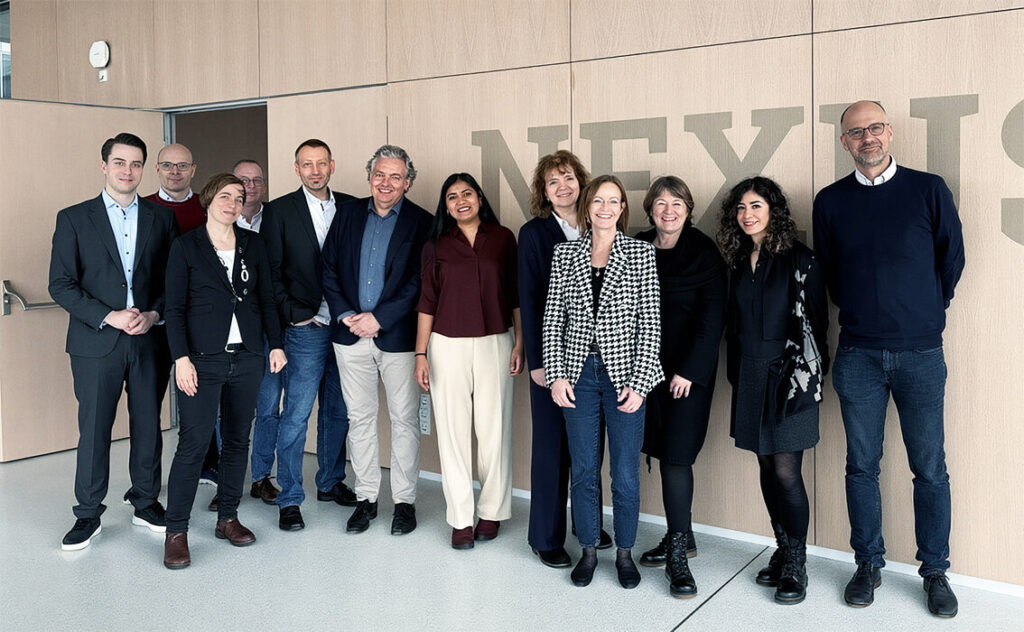
The VDA Flagship Initiative redefined pre-competitive collaboration in Germany. Through a coordinated industry roadmap for automated and connected driving, a strategically managed project portfolio, and new formats for exchange and dissemination, the national ecosystem continued to evolve. A distinctive feature was the initiative’s consistent support by the German Federal Ministry for Economic Affairs and Energy (BMWE). This enabled more coherent technology development, strengthened the impact of research activities across the sector, and promoted a more effective use of public funding beyond individual projects.
Not always easy, but crucial to success: what began as a “everyone for themselves” mindset gradually evolved into a robust culture of exchange and collaboration. Trust was not a result of success, but a prerequisite for it.
2020
From Project Cluster to Collector’s Item
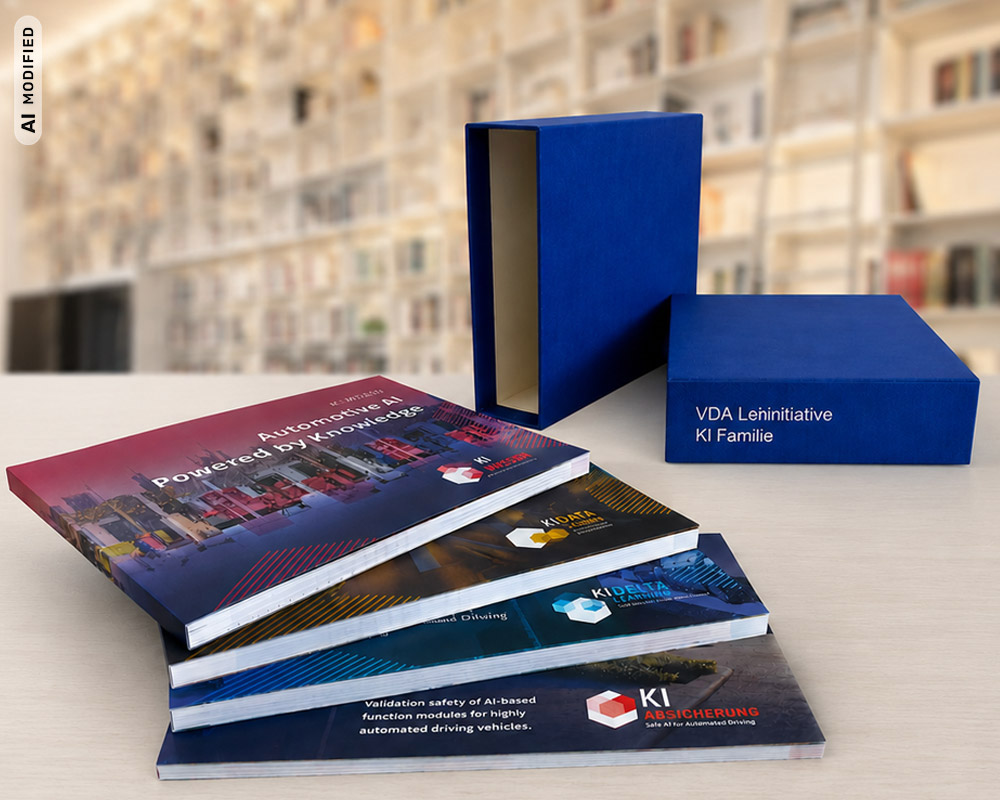
The “KI-Familie” brought together four closely connected projects dedicated to building AI expertise in the automotive sector, covering everything from assurance and tooling to delta learning and knowledge transfer. A shared identity, joint formats, and strong branding made the initiative visible as a whole. Of special significance for our anniversary chronicle: with the completion of “KI-Wissen” in 2024, one final, meticulously crafted print publication was produced, a handmade slipcase bringing together all projects before their results transitioned to a fully digital future.
Our initial approach to family communication was somewhat naïve and became a learning process in its own right. The idea of a shared brand seemed obvious, yet required considerable persuasion. Each project saw itself as something unique, rather than simply one element of a bigger picture. In the end, however, the recognition of being part of a strong and important cluster prevailed, along with the satisfaction of achieving far greater impact together.
2024
Policy Dialogue and Visibility for R&I
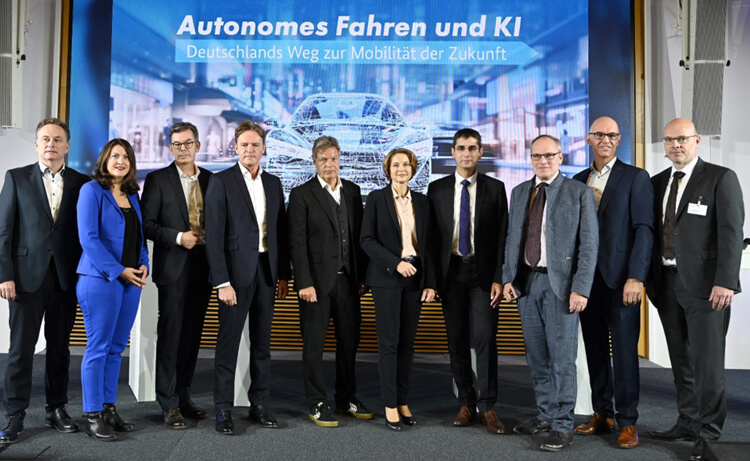
Automated driving and AI move into the political spotlight: in the dialogue between industry and policymakers, including Germany’s Federal Minister Robert Habeck, key issues shaping the future are discussed. Results and data from the AI Family feed directly into projects such as nxtAIM, accelerating the uptake of generative AI.
How did this happen? The strategic direction was clear. What was less predictable was the level at which our research topics would ultimately gain traction. The recipe behind it: just get started. Look for an opportunity and ask. Have strong arguments, bring a bit of tactical skill, and win over committed supporters. And then accept that there may still be a few layers of hierarchy in between…
2026
Strategic Platforms Take Center Stage
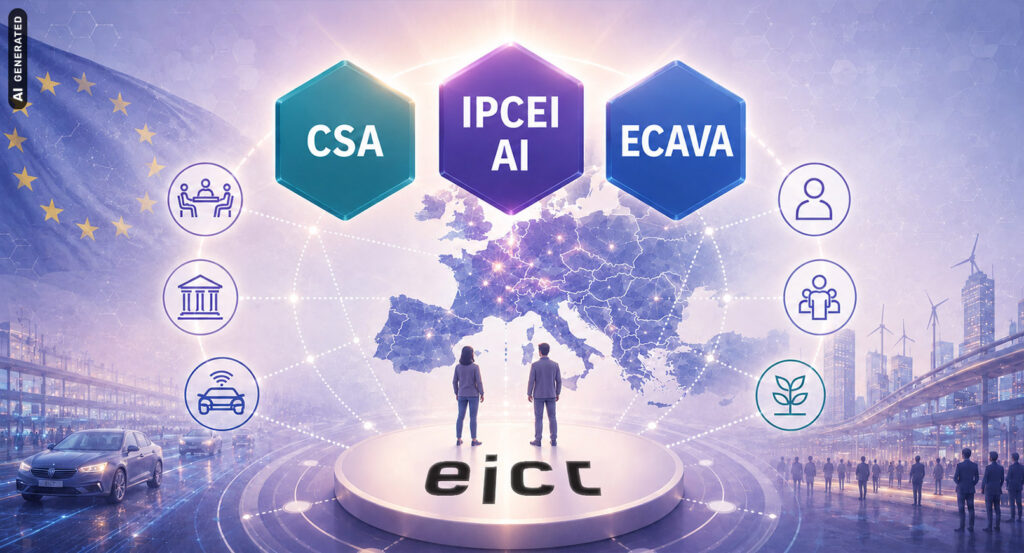
With its involvement in CSA, IPCEI AI, and ECAVA, EICT is actively shaping strategic priorities within the European innovation landscape. The focus is shifting toward long-term, policy-relevant structures in which AI and automated driving are key building blocks. Our role as a “neutral third party” and an enabler remains unchanged, while continuing to evolve with the goal of helping shape an open and competitive European innovation ecosystem.
Stories? Soon to come.
We’re still writing this chapter! 😊
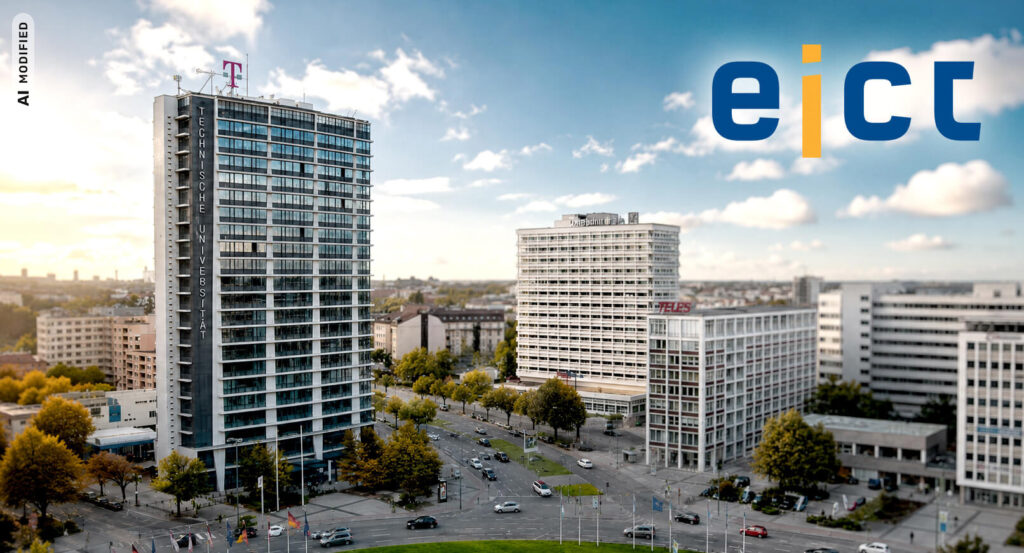
2006
Founding of EICT GmbH
EICT launches as a platform for ICT innovation, backed by partners including Deutsche Telekom, Mercedes-Benz, Siemens, SAP, TU Berlin, and the Fraunhofer Society. Early momentum comes from conferences on IT security and forward-looking studies exploring a wide range of application areas, not least mobility.
At its offices in Berlin-Charlottenburg’s Telefunken Building at Ernst-Reuter-Platz, more than collaboration begins to take shape. The first stories emerge too: from the loudly humming refrigerator in the meeting room to plants that, thanks to regular revival treatments with coffee grounds, have survived to this day!
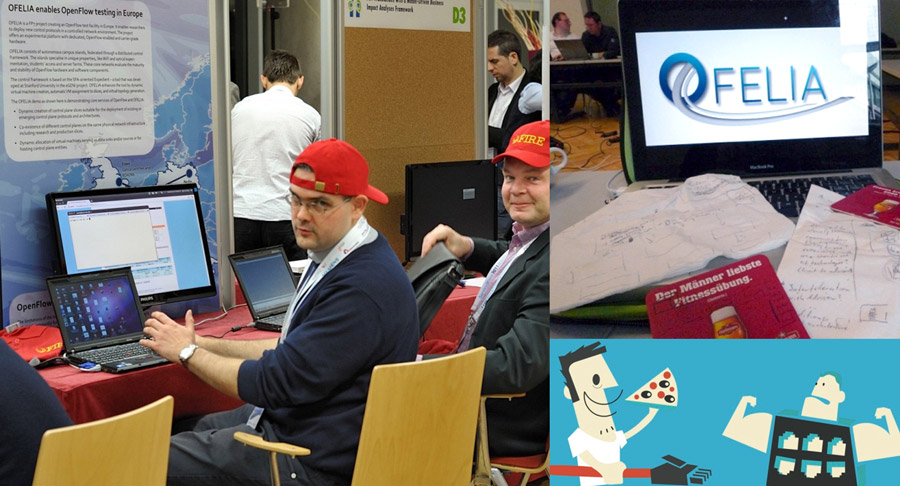
2010
NGN and Testbeds
With European research into Software Defined Networks and OpenFlow, a new technology field begins to emerge. Through OFELIA, EICT coordinates an EU project for the first time and builds its own test environments, serving as a trusted intermediary between research and real-world application. Over time, these topics move closer to the market, ultimately leading to the BISDN spin-off.
And here, too, typical memories are made: a dedicated testbed and, fittingly, a “FlowOpener” conference giveaway.
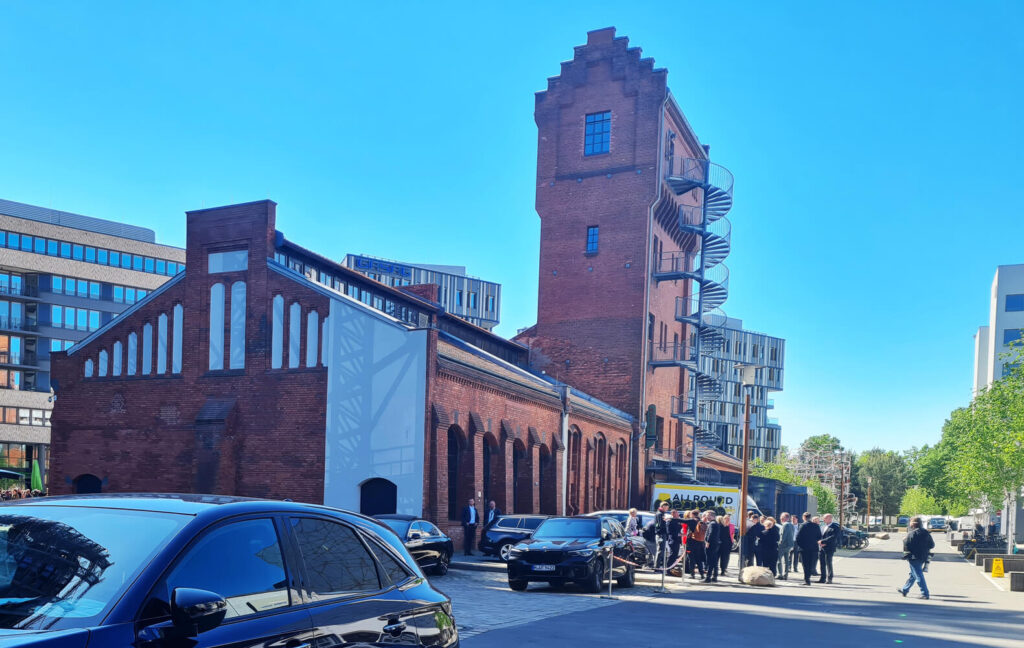
2013
Move to the EUREF Campus
With its move to the EUREF Campus and a change in shareholders, EICT embarks on a new strategic direction. The focus on mobility continues to grow, ranging from electric mobility to major research initiatives such as Mobility2Grid. At the same time, rail emerges as a new area of activity, including projects within the European Shift2Rail programme.
The new location quickly becomes a hub for projects and demonstrations and brings its own stories as well: from major project-closing events right in the heart of the campus to one (memorable) water damage incident!
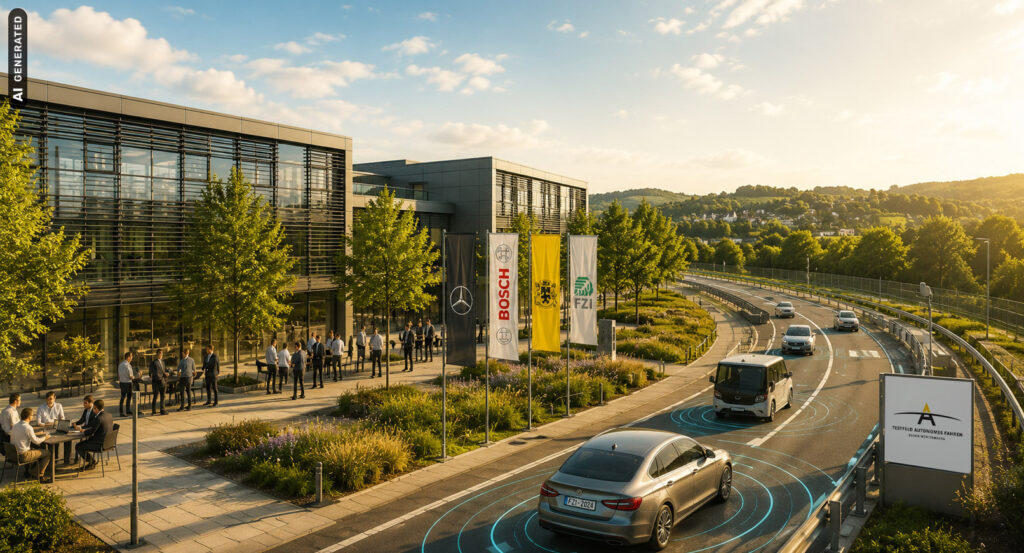
2016
Tech Centers and Test Field: Regional Partnerships in Baden-Württemberg
Several regional initiatives were launched by our shareholders. Together with Mercedes-Benz, Bosch, and the State of Baden-Württemberg, the Tech Centers were established. In the fields of automated driving and passive safety, selected partners worked to bridge the gap between fundamental research and industrial application, including through formats such as a-drive and i-protect. In collaboration with FZI, the Baden-Württemberg Autonomous Driving Test Field was set up and operated in Karlsruhe. Numerous follow-up activities for the regional innovation ecosystem emerged from this initiative.
The unanimous view on building the test field: designing its data protection framework was at least as challenging as its technical implementation. Legend has it that the topic even provided enough material for a doctoral degree in law (Dr. iur.) at FZI.
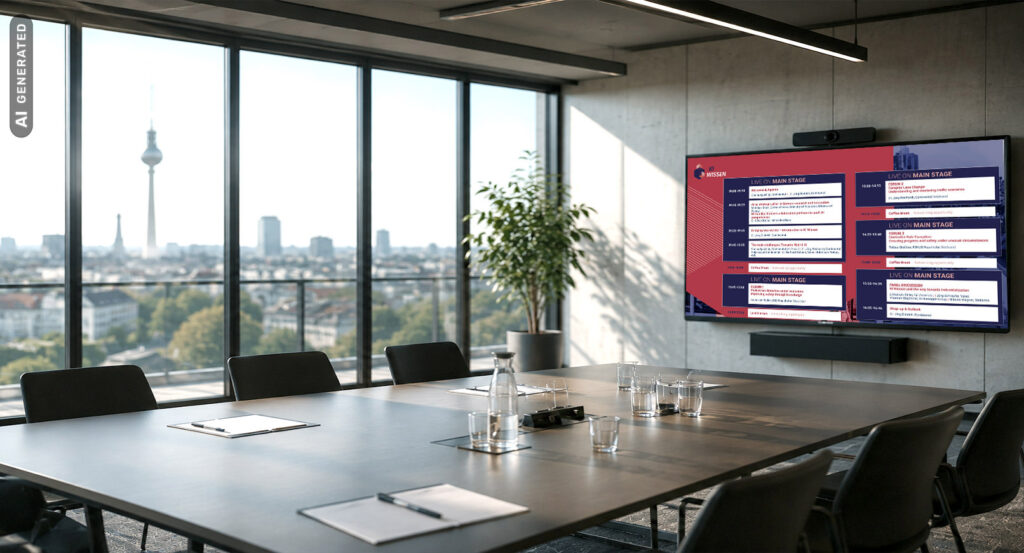
2019
Innovation Despite Distance
Under the constraints of the COVID pandemic and the sudden loss of traditional in-person collaboration, new formats and ways of thinking emerged. With L3Pilot as a European flagship project and the VDA Flagship Initiative’s “KI-Familie” as a broad, coordinated approach, these topics continued to evolve beyond the technological dimension alone. Europe-wide activities, digital guidelines, and a systematic transfer of results and best practices between closely aligned AI projects, combined with a shared presence on international platforms, exemplify this flexibility and demonstrate new approaches to collaboration, communication, and innovation transfer.
And this, too, was part of the reality: the planned workshop series for KI-Absicherung, intended as a forum for intensive exchange and the broad anchoring of a new topic, ultimately never took place. As a result, some partners never met in person throughout the entire collaboration.
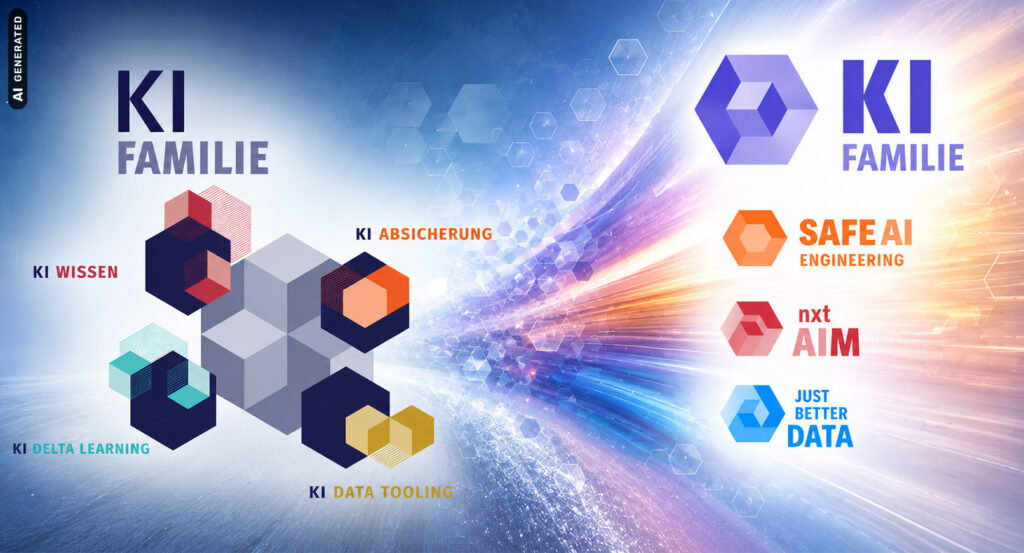
2023
KI Familie – 2nd Generation
Following the initial kick-start phase and the broad development of methodological AI expertise for automated driving, the structures and formats established by the first AI projects are now reaching their full potential. In reality, the VDA Flagship Initiative projects are making data accessible for new initiatives, federated learning was established early and embedded as a blueprint, and “just better DATA” is releasing a dataset featuring highly relevant scenarios.
And this, too, was a first in terms of collaboration: the well-timed alignment of two sister projects not only reduced data collection costs but also enabled targeted sampling.
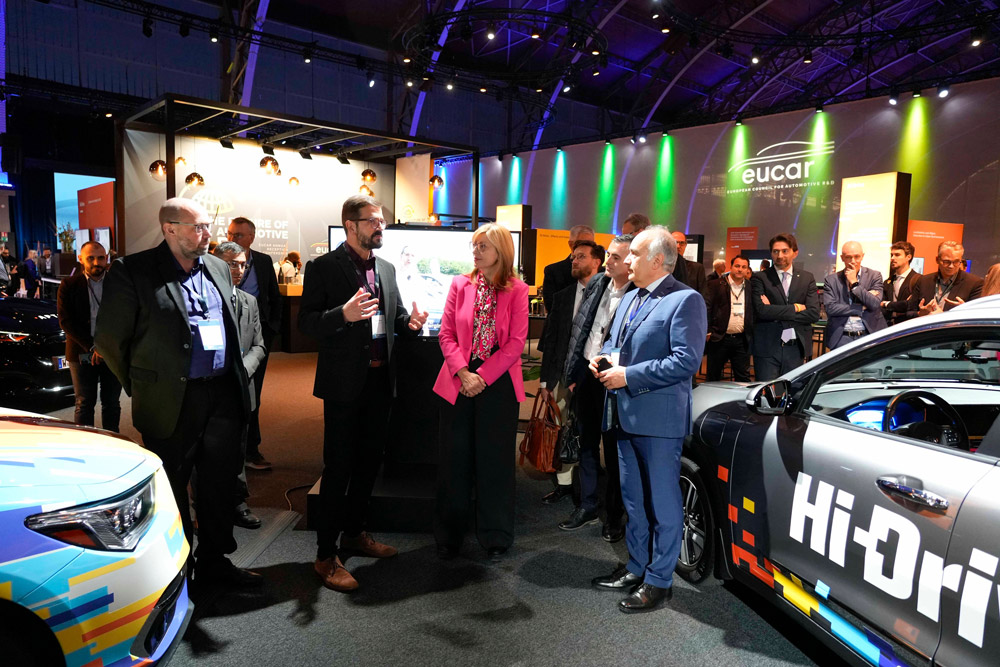
2025
Deployment Across Europe
At the same time, EICT is strengthening European collaboration, for example through Hi-Drive within the EUCAR ecosystem and through contributions to programmes, roadmaps, and strategic initiatives. This is creating a solid foundation for the next stage of automated driving functions: moving from research and testing to large-scale pilot and demonstration projects in preparation for market deployment. Much like in the early days of V2X, success depends on orchestrating diverse stakeholder groups, a capability that has long been one of our core strengths.
One of the enduring surprises of collaboration is this: developers think in terms of technological possibilities, users in terms of practical requirements, and operators in terms of reliable processes. The discussions that emerge are often just as influential as the shared successes.
Milestones
Moments that shaped us, whether small internal gatherings or major public-facing events, tell part of our story. They show how we have grown, what has inspired us, and how we have continued to evolve.
2006
Founding of EICT GmbH
EICT launches as a platform for ICT innovation, backed by partners including Deutsche Telekom, Mercedes-Benz, Siemens, SAP, TU Berlin, and the Fraunhofer Society. Early momentum comes from conferences on IT security and forward-looking studies exploring a wide range of application areas, not least mobility.
At its offices in Berlin-Charlottenburg’s Telefunken Building at Ernst-Reuter-Platz, more than collaboration begins to take shape. The first stories emerge too: from the loudly humming refrigerator in the meeting room to plants that, thanks to regular revival treatments with coffee grounds, have survived to this day!
2008
ADAS & C2X Field Operational Tests
Field operational tests become the new way to bring technologies such as automated driving and connected communication to market readiness. With projects like simTD, euroFOT, DRIVE C2X, and later L3Pilot, a series of landmark national and European flagship initiatives takes shape. Together, they lay the foundations for today’s proving grounds and real-world test environments.
And here, too, stories emerge: data transported on USB sticks at the end of the day, data loggers “dying” one after another in the field, and the first cross-border campaign for connected mobility.
2010
NGN and Testbeds
With European research into Software Defined Networks and OpenFlow, a new technology field begins to emerge. Through OFELIA, EICT coordinates an EU project for the first time and builds its own test environments, serving as a trusted intermediary between research and real-world application. Over time, these topics move closer to the market, ultimately leading to the BISDN spin-off.
And here, too, typical memories are made: a dedicated testbed and, fittingly, a “FlowOpener” conference giveaway.
2011
EIT Digital / 28DIGITAL
Winning the ICT Knowledge and Innovation Community of the European Institute of Innovation and Technology (EIT) gives rise to one of Europe’s first open innovation ecosystems. EICT takes on the establishment of the German node, bringing with it a team transfer and plenty of start-up experience from its own early years.
And this, too, is part of the story: a name that happens to sound suspiciously close to ‘EICT’. The larger scale, however, is no coincidence. Our DNA and expertise provided a decisive boost to the sister platform during its launch phase!
2013
Move to the EUREF Campus
With its move to the EUREF Campus and a change in shareholders, EICT embarks on a new strategic direction. The focus on mobility continues to grow, ranging from electric mobility to major research initiatives such as Mobility2Grid. At the same time, rail emerges as a new area of activity, including projects within the European Shift2Rail programme.
The new location quickly becomes a hub for projects and demonstrations and brings its own stories as well: from major project-closing events right in the heart of the campus to one (memorable) water damage incident!
2015
A New strategic European Direction
EICT supports the strategic evolution of EUCAR, from close collaboration with its Chairman to a comprehensive repositioning of the organisation. The process is built on stakeholder surveys, new guiding principles, and an enhanced conference concept. The partnership remains a defining one and continues through subsequent strategic initiatives.
The annual highlight: the EUCAR Annual Reception and Conference at Brussels’ Autoworld museum. It bridges automotive heritage and the future of mobility, while regularly showcasing our flagship projects.
2016
Tech Centers and Test Field: Regional Partnerships in Baden-Württemberg
Several regional initiatives were launched by our shareholders. Together with Mercedes-Benz, Bosch, and the State of Baden-Württemberg, the Tech Centers were established. In the fields of automated driving and passive safety, selected partners worked to bridge the gap between fundamental research and industrial application, including through formats such as a-drive and i-protect. In collaboration with FZI, the Baden-Württemberg Autonomous Driving Test Field was set up and operated in Karlsruhe. Numerous follow-up activities for the regional innovation ecosystem emerged from this initiative.
The unanimous view on building the test field: designing its data protection framework was at least as challenging as its technical implementation. Legend has it that the topic even provided enough material for a doctoral degree in law (Dr. iur.) at FZI.
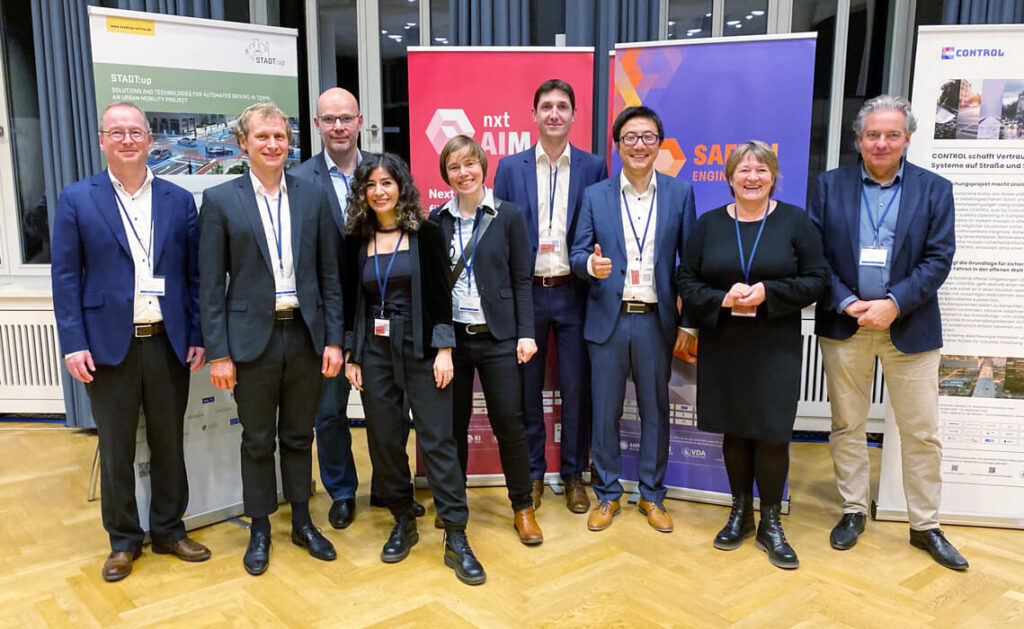
2016
VDA Flagship Initiative for Automated and Connected Driving
The VDA Flagship Initiative redefined pre-competitive collaboration in Germany. Through a coordinated industry roadmap for automated and connected driving, a strategically managed project portfolio, and new formats for exchange and dissemination, the national ecosystem continued to evolve. A distinctive feature was the initiative’s consistent support by the German Federal Ministry for Economic Affairs and Energy (BMWE). This enabled more coherent technology development, strengthened the impact of research activities across the sector, and promoted a more effective use of public funding beyond individual projects.
Not always easy, but crucial to success: what began as a “everyone for themselves” mindset gradually evolved into a robust culture of exchange and collaboration. Trust was not a result of success, but a prerequisite for it.
2019
Innovation Despite Distance
Under the constraints of the COVID pandemic and the sudden loss of traditional in-person collaboration, new formats and ways of thinking emerged. With L3Pilot as a European flagship project and the VDA Flagship Initiative’s “KI-Familie” as a broad, coordinated approach, these topics continued to evolve beyond the technological dimension alone. Europe-wide activities, digital guidelines, and a systematic transfer of results and best practices between closely aligned AI projects, combined with a shared presence on international platforms, exemplify this flexibility and demonstrate new approaches to collaboration, communication, and innovation transfer.
And this, too, was part of the reality: the planned workshop series for KI-Absicherung, intended as a forum for intensive exchange and the broad anchoring of a new topic, ultimately never took place. As a result, some partners never met in person throughout the entire collaboration.
2020
From Project Cluster to Collector’s Item
The “KI-Familie” brought together four closely connected projects dedicated to building AI expertise in the automotive sector, covering everything from assurance and tooling to delta learning and knowledge transfer. A shared identity, joint formats, and strong branding made the initiative visible as a whole. Of special significance for our anniversary chronicle: with the completion of “KI-Wissen” in 2024, one final, meticulously crafted print publication was produced, a handmade slipcase bringing together all projects before their results transitioned to a fully digital future.
Our initial approach to family communication was somewhat naïve and became a learning process in its own right. The idea of a shared brand seemed obvious, yet required considerable persuasion. Each project saw itself as something unique, rather than simply one element of a bigger picture. In the end, however, the recognition of being part of a strong and important cluster prevailed, along with the satisfaction of achieving far greater impact together.
2023
KI Familie – 2nd Generation
Following the initial kick-start phase and the broad development of methodological AI expertise for automated driving, the structures and formats established by the first AI projects are now reaching their full potential. In reality, the VDA Flagship Initiative projects are making data accessible for new initiatives, federated learning was established early and embedded as a blueprint, and “just better DATA” is releasing a dataset featuring highly relevant scenarios.
And this, too, was a first in terms of collaboration: the well-timed alignment of two sister projects not only reduced data collection costs but also enabled targeted sampling.
2024
Policy Dialogue and Visibility for R&I
Automated driving and AI move into the political spotlight: in the dialogue between industry and policymakers, including Germany’s Federal Minister Robert Habeck, key issues shaping the future are discussed. Results and data from the AI Family feed directly into projects such as nxtAIM, accelerating the uptake of generative AI.
How did this happen? The strategic direction was clear. What was less predictable was the level at which our research topics would ultimately gain traction. The recipe behind it: just get started. Look for an opportunity and ask. Have strong arguments, bring a bit of tactical skill, and win over committed supporters. And then accept that there may still be a few layers of hierarchy in between…
2025
Deployment Across Europe
At the same time, EICT is strengthening European collaboration, for example through Hi-Drive within the EUCAR ecosystem and through contributions to programmes, roadmaps, and strategic initiatives. This is creating a solid foundation for the next stage of automated driving functions: moving from research and testing to large-scale pilot and demonstration projects in preparation for market deployment. Much like in the early days of V2X, success depends on orchestrating diverse stakeholder groups, a capability that has long been one of our core strengths.
One of the enduring surprises of collaboration is this: developers think in terms of technological possibilities, users in terms of practical requirements, and operators in terms of reliable processes. The discussions that emerge are often just as influential as the shared successes.
2026
Strategic Platforms Take Center Stage
With its involvement in CSA, IPCEI AI, and ECAVA, EICT is actively shaping strategic priorities within the European innovation landscape. The focus is shifting toward long-term, policy-relevant structures in which AI and automated driving are key building blocks. Our role as a “neutral third party” and an enabler remains unchanged, while continuing to evolve with the goal of helping shape an open and competitive European innovation ecosystem.
Stories? Soon to come. We’re still writing this chapter! 😊
Behind
the
scenes
2025 – Typical EICT: Project management can be surprisingly colorful, and not all event prep happens behind a screen!
2013 – The stubborn Data Logger almost became a research topic in its own right during the simTD project, as the precise collection and analysis of vast amounts of measurement data was an essential prerequisite for validating the innovative Car-to-X communication technology..
From 2006 onwards – Plenty of start-up spirit, creative solutions, and a view that extended well beyond the office window!
2019 – Not every major project at EICT is planned! One renovation project came entirely uninvited: after a water leak, not only our 4th-floor office got a makeover, but the three floors below as well!
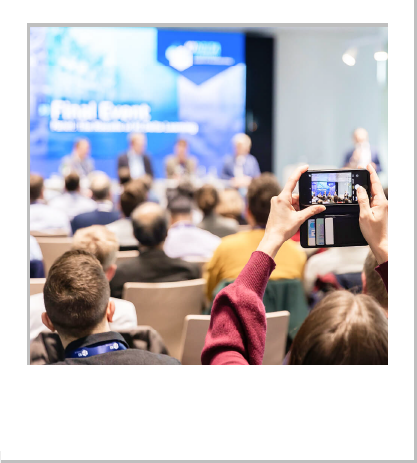
2021 – For the L3Pilot Final Event, we chose a bright white carpet as the central design element of the exhibition booth. Visually, it was a perfect hit. In practice, it served as a daily reminder that several hundred trade show visitors do not float above the ground. Keeping it clean almost became a project in its own right! 😄
Behind the scenes
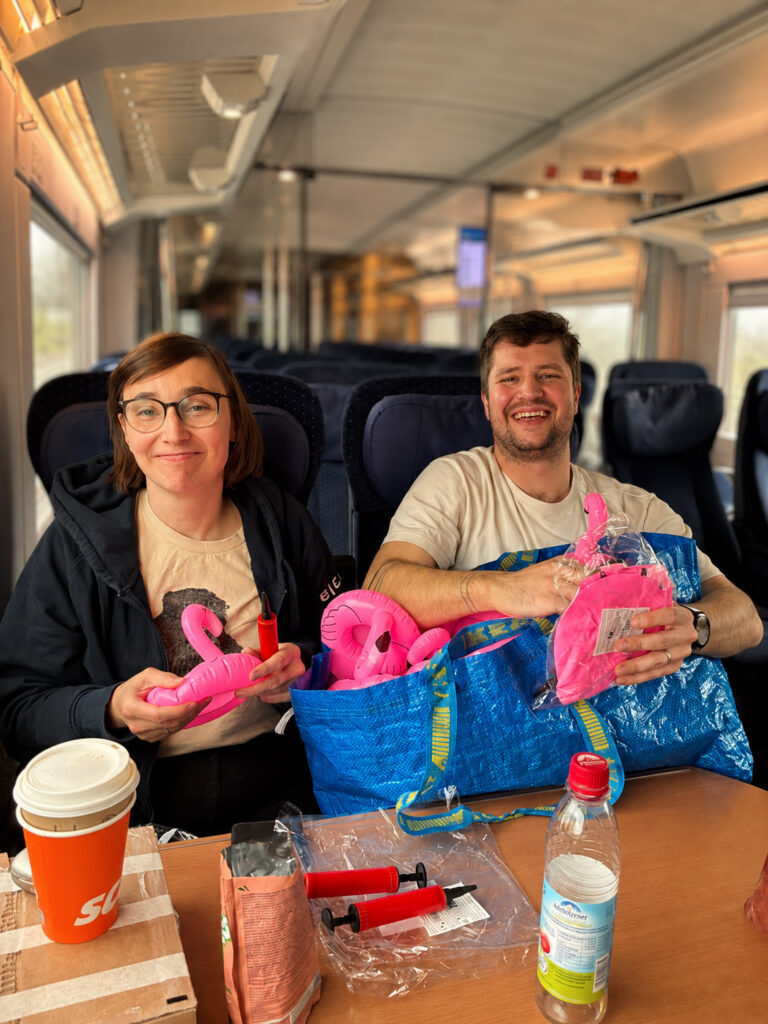
2025 – Typical EICT: Project management can be surprisingly colorful, and not all event prep happens behind a screen!
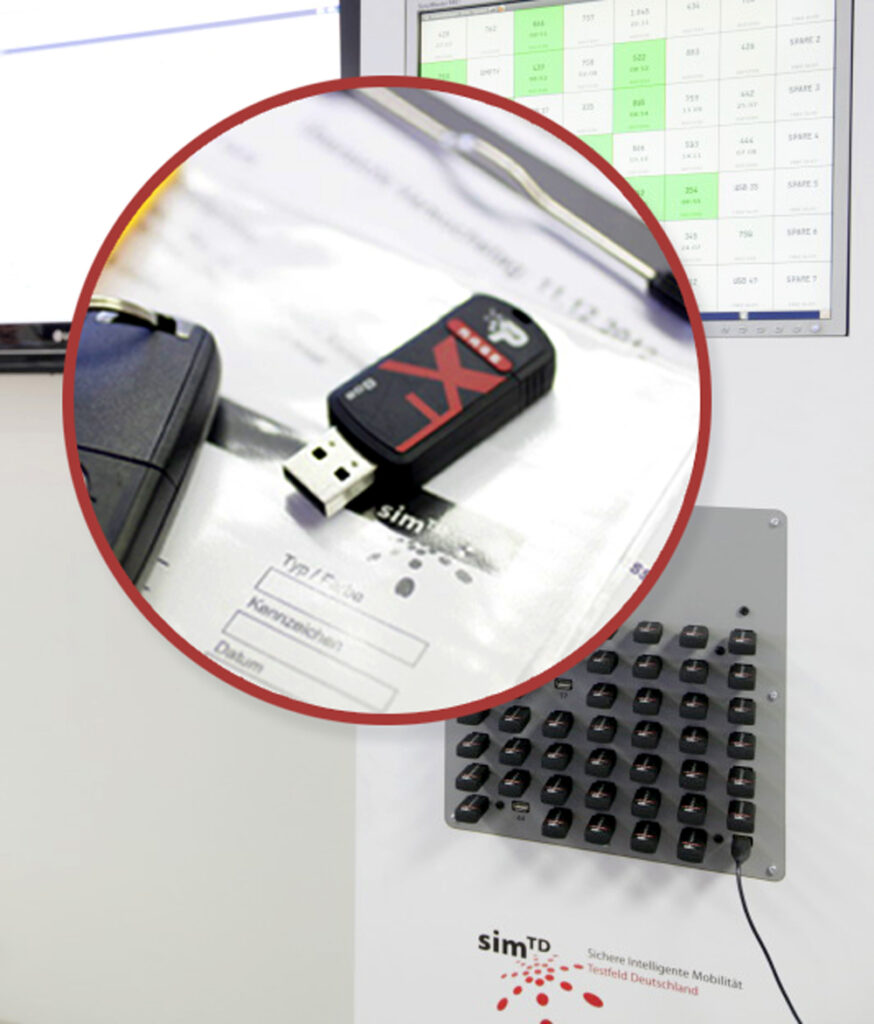
2013 – The stubborn Data Logger almost became a research topic in its own right during the simTD project, as the precise collection and analysis of vast amounts of measurement data was an essential prerequisite for validating the innovative Car-to-X communication technology..
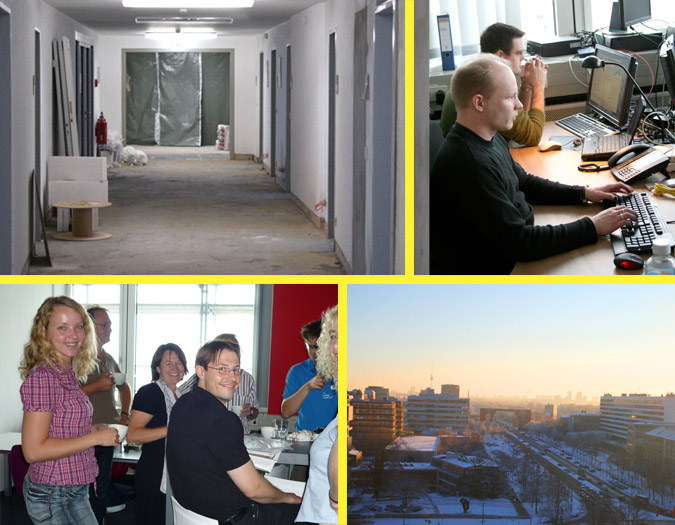
From 2006 onwards – Plenty of start-up spirit, creative solutions, and a view that extended well beyond the office window!
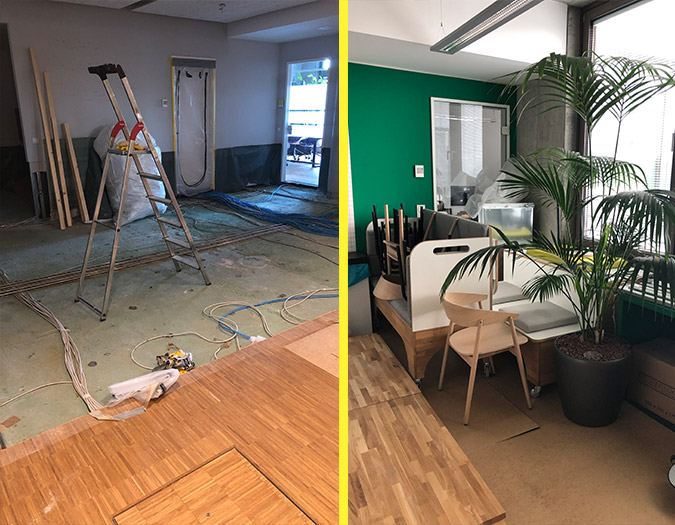
2019 – Not every major project at EICT is planned! One renovation project came entirely uninvited: after a water leak, not only our 4th-floor office got a makeover, but the three floors below as well!
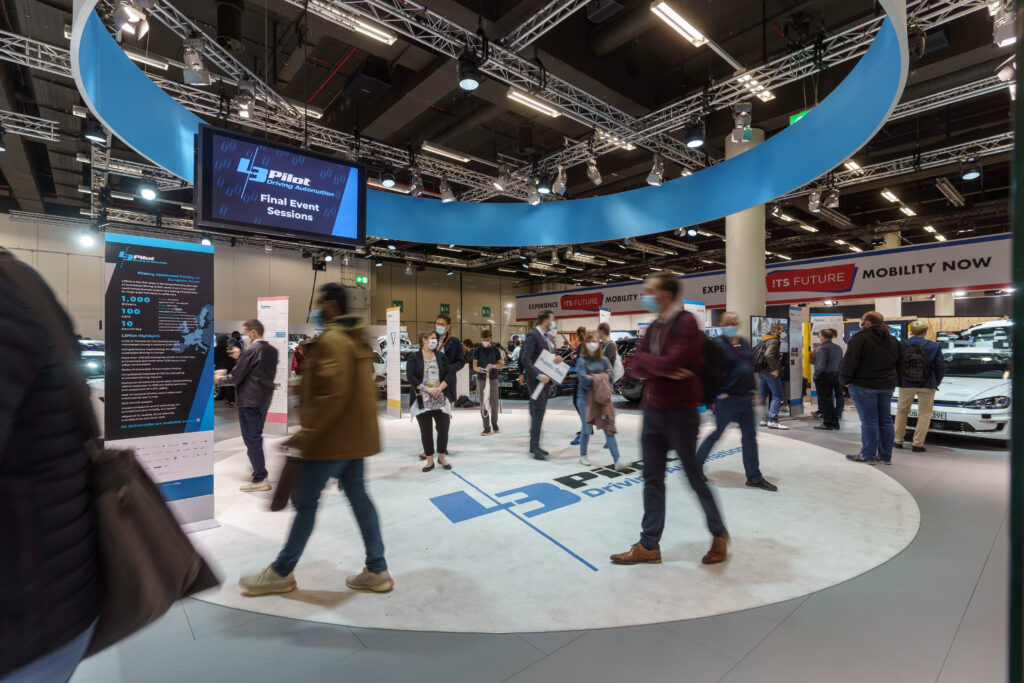
2021 – For the L3Pilot Final Event, we chose a bright white carpet as the central design element of the exhibition booth. Visually, it was a perfect hit. In practice, it served as a daily reminder that several hundred trade show visitors do not float above the ground. Keeping it clean almost became a project in its own right!
Insider FACTS
EICT – it has a nice ring to it. But what does it actually stand for?
How international is EICT, really?
What's behind the EICT logo?
Gender Balance at EICT?
Why is EICT located at the EUREF Campus?
How interdisciplinary is the EICT team?
We Say Thank You!
20 years would not have been possible without the support of more than 250 partners across over 40 major projects, platforms, initiatives, and bespoke assignments.
Our special thanks go to our shareholders – Mercedes-Benz AG, the FZI Research Center for Information Technology, and the PTV Group. Through their expertise, trust, and long-term commitment, they have played a defining role in shaping our work: from jointly advancing key technologies to successfully delivering innovative projects in the field of autonomous driving, always with the ambition of creating lasting societal value and turning innovation into real-world impact.